
AI is here. Responsibility remains human.
Why AI translation does not replace decisions
AI translation is no longer an experiment
AI-based translation systems are established in many organizations. They are used because they are fast, scalable, and can process large volumes of text efficiently. Their use is particularly attractive in e-learning, where content has to be updated regularly and made available in multiple languages.
As a result, the discussion has shifted. The question is no longer whether AI translation will be used, but how its outputs are interpreted and used further.
Translating is not approval
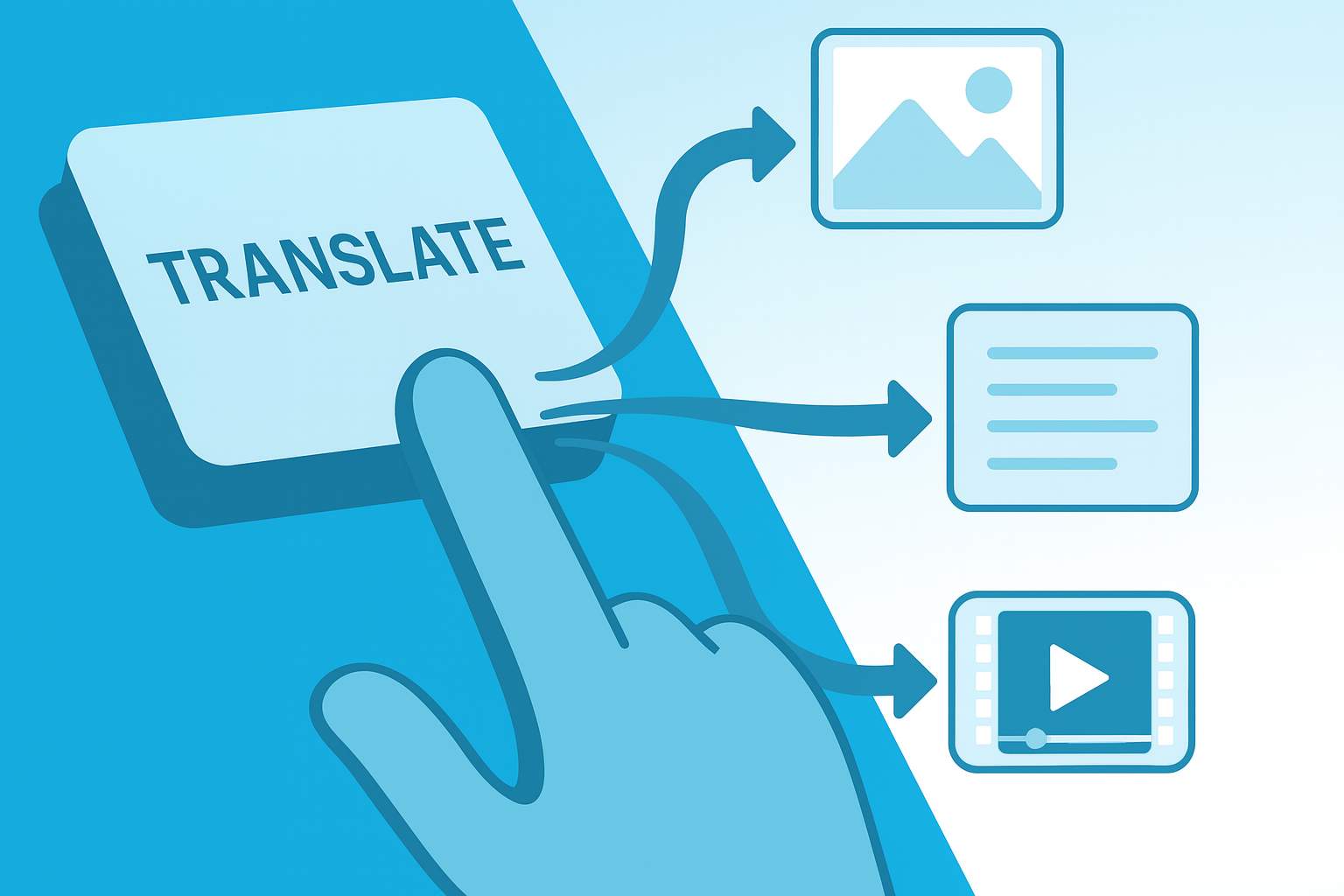
AI translation generates text. It does not decide whether that text can be approved.
Between “translated” and “binding” lie questions of subject-matter accuracy, regulatory appropriateness, and functional impact. These questions cannot be automated, because they are tied to context and responsibility.
You can find more on this topic here: Risk & assurance after AI translation in e-learning
Responsibility is not a feature
AI systems do not bear responsibility. They cannot assume it. If translated content is incorrect, it does not matter whether the error was introduced by an automated system or by a human.
In audits, training, or customer communication, the creation process is secondary. What counts is the effect of the content.
Efficiency is no substitute for decision logic
AI translation is often introduced to speed up processes. It becomes problematic when speed is implicitly treated as a substitute for quality.
Missing review steps shift risk into later phases: into rework, audits, or operational fixes.
Read more: When AI translation is sufficient—and when it is not
The real question is not "AI or humans?"
The debate is often framed too simply: automation versus human review. In practice, the decisive factor is the boundary between the two.
That boundary defines:
- who approves content
- who reviews it
- who is responsible for it
Why this clarification has to happen before deployment
Responsibility cannot be meaningfully assigned afterwards. It has to be defined before automated translation systems are used.
This includes: clear review steps, named responsibilities, a conscious distinction between supportive automation and binding approval
Read more: What review after AI translation actually involves
A starting point, not an endpoint
AI translation is a powerful tool. It does not change the fundamental fact that decisions require human responsibility.
This distinction is the starting point for all further questions around quality, risk, and governance in the e-learning context.
FAQs
What does "responsibility remains with the company" mean in AI translation?
Responsibility means that you decide whether a translated course may be published. AI can generate text, but it cannot assess whether that text is correct in terms of subject matter, triggers the intended actions in the course context, or is phrased in a legally compliant way. If a term is misunderstood or an instruction is ambiguous, what ultimately matters is not who translated it, but what impact the course has in real life.
Is AI translation alone sufficient to approve an e-learning course?
In most cases, no. Approval requires at least a subject-matter and linguistic review in the context of the course. AI output can sound fluent and still lead to wrong decisions (for example, “appropriate” instead of “accurate” or “applicable”). The higher the risk, the reach, or the level of regulation, the clearer the rule: AI can be the starting point, but review is mandatory.
What is the difference between “translating” and “approving”?
Translating means transferring text into another language. Approving means that someone takes responsibility for the content: that it is correct in terms of subject matter, works in the course (buttons, messages, assessments), fits the intended tone of voice, and can be released. In short: translating is production. Approving is a decision.
What content is particularly unsuitable for "AI without review"?
Content is particularly unsuitable for AI-only translation wherever errors could have consequences: Examples include compliance, safety, medical topics, data protection, legally relevant statements, exam questions, mandatory instructions, and process or role descriptions. Also risky is content with a lot of context (for example internal terms or product terminology), because AI can quickly become inconsistent without clear guidance.
What is the most common misconception about AI translation in e-learning?
The most common mistake is equating “sounds good” with “is safe.” Many problematic translations are grammatically correct but semantically off, too vague, or weaker in obligation than the source text. Exactly for this reason you need clear criteria and review steps before anything goes live.
Want to clearly define the boundary between AI and approval?
In a 15-minute review, we look at your course type, media mix, risk profile, and target languages and give you an honest assessment of which review steps you need and where AI alone is sufficient.
Contact: contact@smartspokes.com

TRANSLATION
“Made in Germany” from Baden-Württemberg stands for quality worldwide, and we are committed to upholding this reputation. A high-quality translation should be easy to read, easy to understand, and indistinguishable from an original text in the target language. That is our standard.